
So this decidedly Euro-esque design is to be the largest denomination of the pakistani currency. It sure is a bold break from the past. I wonder if this means they will soon have a stab at the others too-will this ‘new look’ fever spread?
Its reported that the 1000 rupee note is to be discountinued alongwith the 50 rupee note, whilst a new 20 rupee denomination is to be issued soon.
I wonder though if this is really a practical move by the state bank, given the fact that there is an uncomfortably large denomiation-gap between the 500 and 5000, with nothing in between.
Getting back to the design, I cant seem to decide if I do indeed like this new, ‘cleaner’ look-baba’s (ie. Qauid-E-Azam) look has also undergone a complete makeover and he looks much more human-fleshed out in 3D glory.
I do miss however, the garish colours that have been the very fundamentals, the foundations of all currency designs the State Bank has released to date. There functional ugliness saves much fumbling, critically where more aestically pleasing designs lose out. Telling greenback apart, for example, is a particular nightmare..
5000 Rs. though….. that cant be a good thing?
Monday, August 10, 2009
5000 New note in pakistan

Travel Money Quickly and Easily

Flights and hotel are booked, insurance is arranged and even the weather has been checked before I remember that I will need local currency!
Fortunately, there is a quick and easy way to arrange currency exchange.
How to Find Currency Exchange Rates

Pakistan Rupees (PKR) to 1 Australian Dollar (AUD)
The graph below shows historical exchange rates
between the Pakistan Rupee (PKR) and the Australian Dollar (AUD)
between 2/11/2009 and 8/9/2009


Guest Post by A for [pine]Apple
Time was changing when I opened my eyes to this world; everything seemed to be going ‘online’. But still it was not that bad - we still were living our offline lives too. It was time when stamp collection, reading books in their ‘hard copy format’, gaming (offline) with hands and feet involved, making scrap books, collecting dolls, coin collection were few of the more common hobbies instead of chatting, surfing online and downloading music.


I remember years back when someone would come from any foreign land me and my siblings’ would surely ask for some coin tokens to add up in our collection. And it used to be great time of pleasure for me to open up my sis’ stamp and coin collections whenever she was away, as a feast.
PAKISTAN COIN SET

EARLY ANCIENT SILVER COIN FROM INDIA


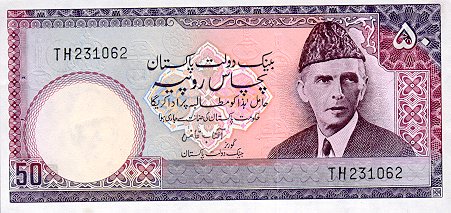
About Pakistani Rupees
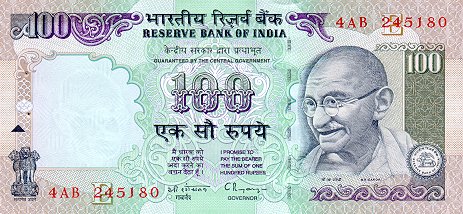
About Indian Notes

Thursday, July 2, 2009
Pakistan open market foreign currency rates
Following are the foreign currency exchange rates in all the cities with slight differance. It is just to give an overall idea only. The rates always keep changing even during the day also.
| US Dollar | 66.80 | 67.00 |
| UK Pound Sterling | 131.45 | 131.65 |
| Australian Dollar | 62.90 | 63.10 |
| Bahrain Dinar | 176.45 | 176.55 |
| Canadian Dollar | 65.35 | 65.55 |
| China Yuan | 9.60 | 9.70 |
| Danish Krone | 13.70 | 13.80 |
| Euro | 103.35 | 103.55 |
| Hong Kong Dollar | 8.48 | 8.58 |
| Indian Rupee | 1.65 | 1.70 |
| Japanese Yen | 0.633 | 0.638 |
| Kuwaiti Dinar | 249.55 | 249.75 |
| Malaysian Ringgit | 20.70 | 20.80 |
| NewZealand $ | 52.30 | 52.50 |
| Norwegians Krone | 12.92 | 13.02 |
| Omani Riyal | 172.85 | 172.95 |
| Qatari Riyal | 18.28 | 18.38 |
| Saudi Riyal | 17.75 | 17.80 |
| Singapore Dollar | 48.95 | 49.15 |
| Swedish Korona | 10.95 | 11.05 |
| Swiss Franc | 63.10 | 63.30 |
| Thai Bhat | 2.05 | 2.10 |
| U.A.E Dirham | 18.15 | 18.20 |
What is the Pakistani rupee (PKR)?
PKR loses 178 paisa against USD in one day
 On Monday, Pak rupee lost 178 paisa or nearly 2.5 percent against US dollar by the closing of day's second trading session on interbank foreign exchange market. Since July 02, the Pak rupee currency has lost 5.5 percent to hit a new all-time low of Rs 71.92 against one dollar. Last fiscal year's closing of rupee was Rs 68.3970 against one dollar. The absence of State Bank of Pakistan from the interbank Foreign Exchange market clearly points towards a strong greenback demand with weak inflows. On the first day of the week, interbank opened at Rs 71.15 to a dollar on bleak political and economic outlook. By afternoon 13:30 hours, the rupee had weakened to Rs 70.95-71.00 buy/sell to a dollar. Since the start of the month the central bank has injected $150 million in the market to satisfy pent-up demand for the greenback. The demand for dollar emerged soon after lifting of 35% cash reserve imposed on certain goods by the SBP through interim measures the central bank had taken in the last week of May 2008. Rising oil prices in the international market, shortage of essential food items due to poor agriculture growth and low FDIs are some of the major factors putting immense pressure on exchange rate. Unfortunately, however, our exports numbers are not sufficient to provide the required support. The oil bill has already reached an alarming level and at current price, $1.6 billion are required to meet the monthly oil bill. Monday's demand was mainly caused by oil payment, capital import payment by some telecom and gas distribution companies and remittance by corporates in power and fertiliser sector. Estimated amount ranges around $100-125 million. Last week, Sate Bank of Pakistan invited Treasury heads of eight leading banks of the country. The central bank warned them against unnecessary interbank FX activity. Banks were told not to quote wide prices to arrest volatility, as a twenty-pip Rs/Dlr quote means that if the offered side was hit then the next quote is up by another twenty paisa, ie if the price is quoted 69.50-70, then next offered price would certainly be above 69.70, possibly 69.70-90, for a two-way quote. Banks throughout the day were scurrying to cover the underlying import demand. Importers were ready to pay premium for forward purchases: 60 paisas for one month; Rs 1.25 per two months; Rs 2.05 for three months; Rs 2.80 for four months; Rs 3.43 for five months; Rs 4.00 for six months; and Rs 7.50 to 8.00 for 12 months to dollar. As a result, banks were buying dollars on ready market and placing them in their NOSTRO account. The State Bank did intervene, but sensing strong demand from jittery importers soon pulled back and allowed the market value to prevail. As a result, in late afternoon, trading Pak rupee went on a steep downward slope to hit the low of Rs 71.95 to a dollar on tomorrow (Tuesday) value. The SBP asked banks to utilise its Foreign Exchange Exposure Limit (FEEL), which is USD 320 Million. This means that 36 banks are authorised to expose itself by either carrying a long dollar positions or a short dollar position, with a market limit of USD 320 million. Historically, in Pakistan, banks never sit on short dollar positions as rupee has a long history of weaknesses due to current account deficit and negative balance of payment. Between 1948 and 1954, one dollar could be obtained for Rs 3.3085. Until December 1971, one USD was equivalent to Rs 4.7679. In 1981, one dollar would fetch Rs 9.90. By the end of 1991, a dollar was worth Rs 24.20. On December 31, 1995 one dollar was equivalent to Rs 31.20, in 1998, a dollar was for Rs 46.10. In 2000, a dollar would fetch Rs 58 and in 2001 60.55. In 2002, rupee gained some strength to close the year at 58.41 and it remained stable until December 2007 and during this 5-year period it lost only 5 percent of its value against the US dollar to close 61.21. On January 02, 2008 one USD was worth 61.85 and as of now rupee has lost 16 percent of its value against the US dollar to close at 71.92. There were two views on the market with regard to SBP exchange rate policy. Some forex experts believe SBP should not allow the base rate to go up so sharply in one day. "Once an L/C is opened, it is then a customer's liability and also the bank as well as of SBP's. Therefore, SBP can buy ready dollars from banks lying in then NOSTRO accounts, and then sell the same in forward back to the bank to smoothen the volatility prevailing on the interbank market," they emphasise. While others feel that SBP should recognise the ground reality and put the brakes on non-essential imports, making them prohibitively expensive by allowing the overnight rates to shoot up. And also, raise interest rates substantially to attract rupee deposits in order to curb the outflows of dollar. The sharp falling rupee has negative connotations on foreign portfolio investment. While local stocks have become very attractive at seven time multiples with dividend yields of 11 to 12 percent, the one percent lower lock has turned the KSE into a one-way street ie coming in with no easy exit. This is also making the foreign portfolio managers uneasy. Meanwhile, exchange companies had closed shops Monday, awaiting a higher rate on Tuesday based on interbank Tuesday value. But one could remit through telegraphic transfers at, ie, lower than interbank rate Rs 71.50 to dollar. UAE dirham was available at Rs 19.00 in exchange companies and Rs 19.40/19.45 with Hundi/Hawala dealers. The supply and demand for dollar is widening and it is becoming difficult for the central bank to control. SBP's own forex reserves are not so large to be effectively used to arrest the slide. SBP HAS TWO OPTIONS: It could provide regular dollars to meet the daily needs, and it would require the injection of a billion dollar on weekly basis for a couple of weeks to stabilise the market. And, subsequently the injection of USD 600,000 for every week until the central bank reserves are sufficient to cover at least 12 weeks' imports. The other option is to give a bitter pill to the nation by sharply hiking the CRR & SLR rates, and, simultaneously making the lending rates so high that rupee becomes more dearer, ie, the choice is either to go for more demand management measures and let the economic wheel move at a slower pace or to spend the reserves to keep growth at comparatively higher level and risk going into an IMF programme. In the later course, the Fund itself would force much sharper rise in lending rates and force an even more deeper slide of rupee against the dollar. It would therefore be more prudent to allow SBP to balance its act not on the basis of any mathematical model but undertake its own value judgement. But this means giving SPB a free hand with full political and fiscal support. LAHORE: The rupee lost 80 paisa against dollar on the buying at Rs 70.50 and Re 1 on the selling side at Rs 71.00 at Lahore currency market on Monday. The dollar kept moving up throughout the day's trading following persistent demand and moved up and closed higher at Rs 70.50 and Rs 71.00 against Rs 69.70 and Rs 70.00. Moneychangers accounted the dollar's increasing demand for its appreciation. The rupee also faced pressure and significantly declined against pound sterling at Rs 137.10 and Rs 138.10 on the buying and selling counters as compared to the last week closing of Rs 136.50 and Rs 137.00. ISLAMABAD: The dollar and showed an extraordinary increase of Rs 1.40 at the currency markets of Islamabad and Rawalpindi on Monday. The dollar resumed trading at Rs 71 (buying) and Rs 71.50 (selling) against last rate of Rs 69.60 (buying) and Rs 69.70 (selling). It did not observe further change in the evening session and closed at Rs 71 (buying) and Rs 71.50 (selling). Pound sterling opened at Rs 148 (buying) and Rs 149 (selling) against last rate of Rs 136.25 (buying) and Rs 136.75 (selling). It did not observe further change in the second session and closed at Rs 148 (buying) and Rs 149 (selling). |
Definition of Money
Money is anything that is generally accepted as payment for goods and services and repayment of debts. The main uses of money are as a medium of exchange, a unit of account, and a store of value.
Aristotle on good money
Aristotle (384 BC – 322 BC) was a Greek philosopher, a student of Plato and teacher of Alexander the Great. Aristotle discovered, formulated, and analyzed the problem of commensurability. He wondered how ratios for a fair exchange of heterogeneous things could be set. He searched for a principle that makes it possible to equate what is apparently unequal and non-comparable.
Aristotle says that money, as a common measure of everything, makes things commensurable and makes it possible to equalize them. He states that it is in the form of money, a substance that has a telos (purpose), that individuals have devised a unit that supplies a measure on the basis of which just exchange can take place. Aristotle thus maintains that everything can be expressed in the universal equivalent of money. He explains that money was introduced to satisfy the requirement that all items exchanged must be comparable in some way.
Within such frame work, Aristotle defined the characteristics of a good form of money:
- It must be durable. Money must stand the test of time and the elements. It must not fade, corrode, or change through time.
- It must be portable. Money hold a high amount of 'worth' relative to its weight and size.
- It must be divisible. Money should be relatively easy to separate and re-combine without affecting its fundamental characteristics. An extension of this idea is that the item should be 'fungible'. Dictionary.com describes fungible as:
"(esp. of goods) being of such nature or kind as to be freely exchangeable or replaceable, in whole or in part, for another of like nature or kind."
- It must have intrinsic value. This value of money should be independent of any other object and contained in the money itself.


